안녕하세요.
좋은 주말 되셔요. 이번 주말은 유발하라리 교수의 미래 담론과 함께 나눔을 해 보시기 바랍니다.
조금 길기는 하지만 유익한 아티클 입니다.
유발 하라리가 말하는 2050년을 위해 인류가 준비해야 하는 것
당신이 인생에서 무엇을 원하는지를 알아야 합니다.
오직 모든 것이 변한다는 사실만 유효하다
인류는 전례 없는 변화를 경험 중입니다. 모든 과거의 이론이 붕괴했으며 어떤 새로운 이론도 이를 대체하지 못했습니다. 이런 유례없는 불확실성의 시대에 우리와 우리 아이들은 어떻게 대처해야 할까요?
지금 태어나는 아이들은 2050년에 겨우 30대 초반일 겁니다. 이들 중 대부분은 2100년, 곧 22세기에도 여전히 활발하게 살아갈 겁니다. 오늘날 태어나는 아이들을 어떻게 가르쳐야 이들이 2050년 또는 22세기를 제대로 살아갈 수 있을까요? 그 시대에도 직장을 얻고 세상을 이해하고 인생의 미로를 헤쳐나가기 위해서는 어떤 종류의 기술을 가져야 할까요?
안타깝게도 오늘날 누구도 2100년, 아니 2050년의 세상조차도 어떤 모습일지 알지 못하며, 따라서 누구도 이 질문의 답을 말할 수 없습니다. 물론 지금까지 인류가 미래를 정확하게 예측했던 적은 없습니다. 하지만 기술이 신체와 뇌와 마음을 제어할 수 있게 된 오늘날, 과거에는 고정되었고 영원할 것이라 여겼던 모든 사실을 이제 확신할 수 없고 따라서 미래를 예측하는 것은 그 어느 때보다도 더 어려운 일이 되었습니다.
지금으로부터 1,000년 전인 1018년에도 사람들은 여전히 미래를 알지 못했습니다. 하지만 그들은 사회의 기본적인 요소가 크게 바뀌지 않으리라는 것은 알았습니다. 만약 당신이 1018년의 중국에 산다면 1050년쯤 송 제국이 멸망하고 거란족이 침입하며, 또 역병이 돌아 수백만 명이 죽는 것을 겪을 겁니다. 하지만 적어도 1050년에도 대다수가 농부와 베 짜는 직공으로 일하고, 정부는 사람들로 이루어진 군대와 관료를 가질 것이며, 가부장제가 유지될 것이며, 평균수명은 여전히 40세 언저리일 것이고, 인간의 육체적 특징 또한 전혀 변하지 않을 것임을 알았을 것입니다.
1018년, 가난한 이들은 아이들에게 어떻게 쌀을 파종하고 비단을 짜야 할 것인지 가르쳤습니다. 부유한 이들은 아들에게는 공자의 가르침과 서예, 말을 타고 싸우는 법을 가르쳤고, 딸에게는 검소하고 성실한 부인이 되는 법을 가르쳤습니다. 그들은 1050년에도 이런 기술이 유용하리라는 데 의심의 여지가 없었습니다.
하지만 오늘날 우리는 중국만이 아니라 다른 세계 역시 2050년에 어떤 특징을 가질지 전혀 예측할 수 없습니다. 사람들이 무엇으로 돈을 벌지, 군대와 정부는 어떤 역할을 할지, 그리고 남자와 여자가 어떤 관계를 맺을지 알지 못합니다. 어떤 이들은 아마 지금보다 훨씬 더 오래 살 것이며, 생명공학과 뇌-컴퓨터 인터페이스 기술을 통해 인간의 육체 또한 과거와는 비할 수 없는 변화를 겪을 것입니다. 오늘날 아이들이 배우는 대부분 기술이 2050년에는 쓸모가 없어질 수 있습니다.
오늘날 대부분 학교는 아이들에게 지식을 주입하는 일에 최선을 다합니다. 과거에는 정보가 희귀한 것이었고 부족한 정보마저도 검열 때문에 쉽게 접할 수 없었기에 이는 매우 합리적인 교육방법이었습니다. 만약 당신이 1800년 멕시코의 작은 마을에서 태어났다면 당신은 바깥세상이 어떤 모습일지 알기 어려웠을 것입니다. 라디오나 텔레비전, 신문, 도서관 등 세상에 대해 배울 수 있는 어떤 도구도 존재하지 않았습니다.
당신이 글을 알고 책을 접할 수 있었다 하더라도 소설이나 종교 서적을 제외한 책은 거의 없었습니다. 스페인 제국은 모든 국내 인쇄물을 철저하게 통제했고, 외국 서적 또한 검열을 통과한 것들만 드물게 허용했습니다. 당시의 러시아, 인도, 터키, 중국도 마찬가지였습니다. 근대적 학교 제도가 등장했을 때, 모든 아이를 읽고 쓸 수 있게 만드는 것과 지리학, 역사, 생물학의 기본적인 지식을 가르치는 것은 곧 인류의 거대한 진보를 의미했습니다.
하지만 21세기, 우리는 너무나 많은 정보에 둘러싸여 있으며, 이를 막으려 하는 이도 없습니다. 그 대신 어떤 이들은 잘못된 정보를 퍼뜨리며, 우리의 관심을 불필요한 것으로 돌리게 만듭니다. 당신이 지금 멕시코의 마을에 살며 스마트폰이 있다면 많은 시간을 위키피디아를 읽고, TED 강연을 보며, 온라인 수업을 들을 수 있습니다. 어떤 정부도 그들이 원하지 않는 정보를 완전하게 통제할 수 있을 것이라 생각하지 않습니다.
대신 이제 사람들에게 잘못된 정보를 전달하고 관심을 다른 곳으로 돌리게 만드는 것이 극도로 쉬워졌습니다. 전 세계의 사람들이 클릭 한 번으로 시리아 알레포에 떨어진 폭격 소식과 북극의 빙산이 녹는 것을 알 수 있지만, 또한 수많은 반대되는 주장들이 있어 무엇을 믿어야 할지 알기 어렵습니다. 게다가 역시 수많은 다른 주제 때문에 사람들은 한 가지에 집중할 수 없으며 또한 정치와 과학이 너무 어렵게 보일 때 고양이 비디오나 연예인 소식, 포르노 영상은 더욱 유혹적입니다.
이런 세상에서 학교가 학생들에게 가장 가르칠 필요가 없는 것이 더 많은 정보일 것입니다. 이미 학생들은 너무나 많은 정보를 가졌습니다. 그 대신, 사람들은 그 정보가 합리적인지를 판단할 수 있는 능력과 무엇이 중요하고 무엇이 그렇지 않은지를 알 수 있는 능력을 필요로 하며, 무엇보다도 수많은 작은 정보를 모아 세상에 대한 폭넓은 관점을 가지는 능력을 필요로 합니다.
물론 이는 서구의 진보적 교육이 수백 년 동안 추구해온 목표이지만 아직도 대부분의 서구 학교에서는 만족스러운 수준에 이르지 못했습니다. 학교는 학생들로 하여금 ‘스스로 생각하는’ 방법을 가르치기보다는 정보를 직접 먹여주는 역할을 합니다. 권위주의에 대한 두려움은 진보적인 학교로 하여금 거대담론에 대한 특별한 공포를 가지게 만들었습니다. 그들은 학생들에게 많은 지식과 약간의 자유를 줄 경우 학생들이 알아서 세상을 이해하고, 설사 그들 세대가 모든 지식을 하나의 일관된 세계관으로 승화시키지 못한다 하더라도 미래에 이를 해낼 수 있는 충분한 시간이 있을 것이라 가정합니다.
그러나 그런 시간은 존재하지 않습니다. 앞으로 10-20년 내에 우리가 내릴 결정은 인류의 미래 자체를 결정할 것이며, 우리는 오직 우리가 지금 가진 세계관을 바탕으로 그런 결정을 내릴 수 있을 뿐입니다. 만약 이 세대가 우주를 총체적으로 이해하지 못한다면, 인류의 운명 또한 그저 던져진 주사위에 의존할 뿐입니다.
변화는 시작되었다
학교는 너무 많은 정보를 주입하는 것 외에도 미분방정식 풀이나 C++ 프로그래밍, 시험관의 원소 식별과 중국어 대화 같은 특정한 기술을 가르치는데 너무 전문화되어 있습니다. 2050년 세상이 어떻게 바뀔지 모르는 지금 이 시점에서 앞으로 어떤 기술이 가치 있을지 알 수 없습니다. 지금 C++ 프로그래밍이나 중국어 대화에 너무 많은 자원을 투자하지만 막상 2050년이 되었을 때 인공지능이 인간보다 프로그래밍을 더 잘하며 새로운 구글 번역 앱이 만다린, 칸토니즈, 하카를 거의 불편함 없이 통역해줄지 모릅니다.
그럼 지금 우리는 어떤 기술을 가르쳐야 할까요? 많은 교육 전문가는 학교가 ‘네 가지 C’, 곧 비판적 사고(critical thinking), 의사소통(communication), 협력(collaboration), 창의력(creativity)을 가르쳐야 한다고 말합니다. 곧 학교는 구체적인 기술 교육을 줄이고 더 범용적인 삶의 기술을 가르쳐야 한다는 것입니다. 무엇보다도 변화에 대응하는 능력, 새로운 것을 배우고 익숙하지 않은 상황에서도 정신적 균형을 유지하는 능력이 필요합니다. 2050년의 세상을 살아가기 위해서는 새로운 아이디어와 제품을 발명하는 능력 못지않게 자기 자신을 끊임없이 재발명할 수 있어야 합니다.
변화의 속도와 함께 경제적 변화 외에 ‘인간의 조건’ 또한 변화했습니다. 1848년, 공산당 선언에는 ‘모든 확실한 것들이 공기 중으로 사라진다’는 말이 있습니다. 그러나 마르크스와 엥겔스가 염두에 두었던 것은 사회경제적 구조였습니다. 2048년에는 물리적, 인지적 구조 또한 공기 중으로, 혹은 데이터 클라우드 속으로 사라질 것입니다.
1848년에는 수백만 명의 사람들이 농장에서 직장을 잃었고, 공장에서 일하기 위해 도시로 옮겨갔습니다. 하지만 공장에서도 자신의 성별을 바꿀 필요나 새로운 감각을 개발할 필요는 없었습니다. 직물공장에서 일자리를 찾고 나면 남은 인생은 그 일을 하며 보낼 수 있었습니다. 2048년 사람들은 어쩌면 가상 공간으로 이주해야 할 수 있습니다. 자신의 성별 역시 바뀔 수 있으며 인체에 이식된 컴퓨터에 의해 새로운 감각적 경험을 할 수 있습니다. 3차원 가상 현실 게임에서 최신 의상을 디자인하는 직업이 이미 존재합니다.
10년 내로 이 특정한 직업뿐 아니라 이와 비슷한 예술적 감각을 필요로 하는 직업에 인공지능이 도입될 수 있습니다. 즉 25살 때 연애 사이트 프로필에 ‘런던의 옷가게에서 일하는 25살의 이성애 여성’이라고 썼던 여인이 35살 때는 ‘나이는 조정 중이고 성별도 따로 없음. 뉴코스모스 가상세계에서 신피질 활동을 하며, 인생의 목적은 지금까지 어떤 패션 디자이너도 가보지 못한 영역을 가보는 것’이라고 쓸 수 있습니다.
45살 때는 연애나 자기소개라는 개념 자체가 너무 시대에 뒤떨어진 것이 되어 있을 겁니다. 그저 적절한 알고리듬이 내게 딱 맞는 상대방을 찾거나 ‘만들어’ 줄 겁니다. 패션 디자인 예술 분야는 알고리듬이 너무나 발달한 나머지 과거 당신이 만들었던 가장 뛰어난 작품조차도 자부심보다는 창피함만 느끼게 만들 수 있습니다. 하지만 45살이면 아직도 지켜보아야 할 세상의 급격한 변화가 충분히 더 남아 있습니다.
위의 이야기를 그대로 받아들일 필요는 없습니다. 앞서 말한 것처럼, 누구도 우리가 볼 미래를 정확하게 예측할 수 없습니다. 어떤 구체적인 미래도 실제 진실과는 거리가 멀 겁니다. 누군가 당신에게 21세기 중반의 세상을 설명하고 그 내용이 마치 과학 소설처럼 느껴진다면, 그 예측은 틀릴 가능성이 높습니다. 또 다른 이가 21세기 중반을 당신에게 설명하는데 그 내용이 전혀 과학 소설처럼 느껴지지 않는다면, 그건 확실히 맞지 않을 겁니다.
우리는 어떤 구체적인 미래도 확신할 수 없습니다. 오직 분명한 것은 모든 것이 변할 것이라는 사실 뿐입니다. 이러한 심오한 변화는 삶의 기본적인 구조마저도 그 가장 확실한 특징을 바꾸면서 변화시킬 수 있습니다. 인류가 문명을 만들기 전의 오랜 과거부터 인간의 삶은 두 부분으로 나뉘어 있었습니다. 바로 일을 배우는 시기와, 그 일을 하는 시기입니다.
삶의 전반부에 우리는 지식을 축적하고, 기술을 갈고 닦으며, 세상을 보는 관점을 세우고, 자신의 정체성을 만들었습니다. 15세의 나이로 학교를 가지 않고 종일 가족이 소유한 논에서 일하더라도 그 시기 가장 중요한 것은 논농사를 하는 방법과 대도시에서 온 욕심 많은 곡물 매매상을 상대하는 법, 옆 논의 주인과 물과 땅을 두고 생기는 충돌을 해결하는 법을 배우는 일입니다.
삶의 두 번째 시기에는 그동안 갈고 닦은 기술을 바탕으로 돈을 벌며 세상을 탐험하고, 사회에 기여합니다. 물론 50살이 되어서도 여전히 쌀에 대해, 상인과 이웃에 대해 배울 수 있지만 이는 일찌감치 배웠던 내용을 조금 더 섬세하게 만드는 것에 불과합니다. 하지만 21세기 중반의 세상에서 급격한 변화의 속도와 길어진 수명은 이러한 과거의 모델을 무용하게 만들었습니다. 인생은 점점 더 잘게 쪼개지며, 각 구간은 연속적이지 않습니다.
‘나는 누구인가?’는 그 어느 때보다도 더 중요하고 복잡한 질문이 되었습니다. 이는 엄청난 수준의 스트레스를 포함합니다. 변화는 언제나 스트레스를 동반하며, 일정한 나이 이후 사람들은 변화를 꺼립니다. 15세의 아이에게 세상은 끊임없이 바뀌는 것입니다. 신체가 자라고 생각이 깊어지며 새로운 사람들과 관계를 맺습니다. 모든 것이 변화하며 모든 것이 새롭습니다. 그리고 자신을 계발하는 데 최선을 다합니다. 대다수 10대는 이를 두려워하지만 동시에 신나는 일로 즐깁니다.
그러나 50살이 되면 이제 변화는 두려운 것이 되며, 대다수는 세상과 싸우기를 포기합니다. 이미 가 보았고, 직접 해 보았고, 남은 것은 티셔츠뿐입니다. 안정적인 삶을 선호합니다. 지금 가진 기술과 경력, 정체성과 세계관에 너무 많은 투자를 했고, 모든 것을 새로 시작하길 원하지 않습니다. 무언가를 만들기 위해 열심히 일한 사람들일수록 이를 포기하고 새로운 것을 시작하기 쉽지 않습니다.
새로운 경험을 소중히 여기고 조금씩 변화를 만들어나갈 수는 있지만, 대다수는 50대에 자신의 정체성과 인격을 크게 바꾸고 싶어 하지 않습니다. 여기에는 뇌과학적인 이유도 있습니다. 비록 성인의 뇌 또한 과거 우리가 알던 것보다는 더 유연하고 변화할 수 있다는 사실이 밝혀졌지만 10대의 유연한 뇌에는 비할 수 없습니다. 뉴런을 다시 연결하고 시냅스를 추가하는 것은 매우 어려운 일입니다.
그러나 21세기는 안정성을 추구할 수 있는 시대가 아닙니다. 정체성을, 직업을, 세계관을 바꾸지 않는다면 세상의 변화를 따라잡지 못하고 뒤떨어진 사람이 될 뿐입니다. 기대수명의 증가는 당신을 살아 있는 화석으로 만들지 모릅니다. 이제 50살은 충분히 젊은 나이일 것이며, 따라서 경쟁력을 유지하기 위해서는 단순히 경제적인 면을 넘어 사회적으로 항상 새로운 것을 배우고 자신을 재발명할 수 있어야 합니다.
생소함이 새로운 표준이 되는 시대에 당신의 과거 경험과 다른 모든 인류의 과거 경험은 예전처럼 믿을 수 있는 기준이 되지 못합니다. 개인으로서의 한 사람과 전체 인류는 초지능 기계나 강화 신체, 인간의 감정을 믿을 수 없이 정밀하게 조종하는 알고리듬, 인류에 의한 기후 격변, 10년마다 직업을 바꾸어야 하는 급격한 변화 등 지금까지 어떤 인류도 겪어보지 못했던 것들을 대해야 합니다.
완벽하게 전례가 없는 이런 상황은 어떻게 대처해야 할까요? 막대한 양의 정보가 쏟아져 들어오고 이를 흡수하거나 분석할 방법이 전혀 없을 때 우리는 어떻게 해야 할까요? 엄청난 불확정성이 세상의 우연한 문제가 아니라 본질적인 특성일 때 우리는 어떻게 살아가야 할까요? 그런 세상에서 살아남고 성공하기 위해서는 뛰어난 지적 적응력과 충분한 감정적 균형능력을 갖추어야 합니다. 당신이 가장 잘 아는 영역을 때로 포기해야 하며 전혀 알지 못하는 분야를 편안하게 느낄 수 있어야 합니다.
불행히도 아이들을 알 수 없는 것들에 익숙해지게 만들고 정신적 균형을 유지하게 만들도록 가르치는 것은 물리학 공식이나 1차대전이 발발한 이유를 가르치는 것보다 훨씬 어려운 일입니다. 책을 읽거나 강의를 듣는 것으로 회복 탄력성(resilience)을 배울 수는 없습니다. 대다수 교사 역시 20세기 교육을 받았으며 이 때문에 21세기가 요구하는 지적 유연성을 가지지 못합니다.
산업혁명의 결과 우리는 마치 생산라인과 같은 교육 시스템을 가졌습니다. 마을 한가운데 커다란 콘크리트 빌딩이 서 있고, 내부에는 수많은 동일한 교실이 있으며, 각 교실에는 책상과 의자가 일렬로 늘어서 있습니다. 종이 울리면 같은 해에 태어난 서른 명의 아이들과 함께 그중 한 교실로 들어갑니다. 매시간 어른 한 명이 들어와 이야기를 시작합니다.
그들은 이 일로 정부에서 봉급을 받습니다. 그중 한 명은 지구의 형태를 이야기하고, 다른 이는 인류의 역사를, 또 다른 이는 인체에 대해 이야기합니다. 비록 인류가 이 방법으로 커다란 진보를 이루어냈다는 것을 부정할 이는 없겠지만, 이제 이 모델은 더 이상 유용하지 않습니다. 하지만 우리는 아직 쓸만한 대안을 만들어내지 못했습니다. 캘리포니아 교외와 같은 선진국뿐 아니라 멕시코 시골에도 적용 가능한 모델은 없습니다.
인간에 대한 해킹
지금 내가 멕시코나 인도, 앨라배마의 구식 학교에 다니는 15살 아이에게 줄 수 있는 최선의 조언은 바로 이것입니다. 곧 어른들을 너무 의지하지 말라는 것입니다. 어른들은 대부분 선한 의도를 가졌겠지만 그들 또한 세상을 이해하지 못했습니다. 과거에는 어른들의 지시를 따르는 것이 상대적으로 안전한 방법이었고 이는 그들이 세상을 잘 알기 때문이며, 또한 세상이 느리게 변했습니다.
하지만 21세기는 다릅니다. 점점 더 변화의 속도가 빨라지며 어른들이 말하는 정보가 시대를 초월한 지식인지 아니면 오래된 편견인지 확실하게 구분할 수 없습니다. 그럼 무엇에 의지해야 할까요? 기술일까요? 하지만 기술은 더 위험요소가 많은 도박입니다. 기술은 여러 면에서 당신을 도와줄 수 있지만, 기술이 당신의 주도권을 가져갈 경우 이제 당신은 기술의 포로가 될 수 있습니다.
수천 년 전 인류는 농업을 발명했지만, 이 기술은 소수의 엘리트만을 살찌웠고 다수 인류는 노예와 같은 생활을 해야 했습니다. 대부분의 사람들은 해가 뜰 때부터 해가 질 때까지 잡초를 뽑고, 물을 나르고, 뜨거운 태양 아래서 옥수수를 수확해야 했습니다. 같은 일이 지금 다시 일어날 수 있습니다.
기술은 그 자체로 나쁜 것은 아닙니다. 만약 당신이 삶에서 무엇을 원하는지 확실하다면, 기술은 당신이 이를 얻을 수 있게 만들어 줄 겁니다. 하지만 당신이 삶에서 원하는 것이 확실하지 않다면, 기술이 당신의 목표를 조종하고 당신 삶을 좌우할 것입니다. 특히 기술이 인간을 더 잘 이해할수록, 당신은 점점 더 기술이 당신에 봉사하기보다 당신이 기술에 봉사하는 것을 발견할 것입니다. 길거리에서 자신의 얼굴을 환한 스마트폰에 처박고 배회하는 좀비들을 본 적이 있나요? 당신은 그들이 기술을 지배한다고 생각하나요? 아니면 기술이 그들을 지배한다고 생각하나요?
그럼 당신 자신에게 의지해야 할까요? 이 말은 〈세서미 스트리트〉나 옛날 디즈니 영화에서 나올 때는 그럴듯하게 들렸겠지만 현실에서는 그렇지 않습니다. 사실 디즈니도 이제 이 사실을 깨달았습니다. 〈인사이드 아웃〉의 라일리 앤더슨처럼 대부분의 사람들은 자기 자신에 대해 잘 알지 못하며, ‘내면의 목소리’를 들으려 할 때조차도 외부에서 가해지는 조작의 희생양이 되기 마련입니다. 우리가 생각하는 마음의 소리는 절대 믿을 수 있는 것이 아니며, 이는 우리 뇌가 본래 가진 생화학적 오류 외에도 국가나 이데올로기, 상업적 광고에 쉽게 휘둘리기 때문입니다.
생명공학 기술과 기계학습 기술이 발달할수록 사람들의 감정과 욕망은 더 쉽게 조작될 것이며, 따라서 자신의 내면의 소리를 따르는 것은 더 위험한 일이 될 수 있습니다. 코카콜라, 아마존, 바이두 혹은 정부가 당신을 조종하는 방법을 파악하고 당신이 반응하는 약점을 누를 때 과연 당신은 당신의 진짜 자신과 그들의 지시를 따르는 자신을 구별할 수 있을까요?
이 어려운 문제를 해결하기 위해서는 자신의 진짜 모습을 알기 위해 매우 열심히 노력해야 합니다. 그리고 당신이 인생에서 무엇을 원하는지 알아야 합니다. 사실 이 교훈은 역사적으로 가장 오래된 교훈이기도 합니다. 바로 ‘너 자신을 알라’는 것이죠. 사실 철학자와 선지자들은 수천 년 동안 사람들에게 스스로를 알아야 한다고 말해왔습니다.
이 충고는 21세기 오늘날 그 어떤 과거보다도 더 중요한 조언이 되었습니다. 노자나 소크라테스의 시대와 달리, 이제 당신을 당신보다 더 잘 알 수 있는 이들이 생겼기 때문입니다. 코카콜라, 아마존, 바이두, 그리고 정부가 바로 그들입니다. 그들은 당신의 스마트폰이나 당신의 컴퓨터, 당신의 은행 계좌가 아니라, 바로 당신 자신을 속속들이 이해하려 합니다. 당신은 오늘날이 컴퓨터 해킹의 시대라는 말을 들었을 겁니다. 하지만 이 말은 진실을 제대로 표현하지 못합니다. 이 시대는 바로 인간을 해킹하는 시대입니다.
알고리듬은 지금도 당신을 지켜봅니다. 당신이 어디를 가는지, 무엇을 사는지, 누구를 만나는지 봅니다. 곧 당신의 모든 걸음걸이, 모든 호흡, 모든 심장 박동을 지켜볼 것입니다. 빅데이터와 기계학습 기술을 이용해 당신에 대해 점점 더 잘 알 것입니다. 이 알고리듬이 당신을 당신보다 더 잘 아는 순간 이제 그들은 당신을 조종하고 조작할 것이며 당신은 그저 이를 지켜볼 수밖에 없을 것입니다. 당신은 〈매트릭스〉와 〈트루먼 쇼〉의 주인공이 될 것입니다.
사실 이는 매우 당연한 이야기입니다. 알고리듬이 당신의 머릿속에서 일어나는 일을 당신보다 더 잘 이해한다면, 당신을 움직이는 권력 또한 알고리듬이 가져가는 것입니다. 물론 당신은 알고리듬에 모든 권력을 기꺼이 이양하고 알고리듬이 당신에게 최선의 것을 선택해주리라 믿을 수 있습니다. 만약 그렇다면 그저 편안하게 세상의 발전을 지켜보면 됩니다. 사실 당신이 특별히 해야 할 일도 없습니다. 알고리듬이 모든 것을 알아서 해줄 테니까요.
그러나 혹시 당신이 자신의 존재와 미래에 어느 정도 주도권을 가지고 싶다면, 당신은 알고리듬보다, 아마존과 정부보다 더 빨리 뛰어야 하며, 그들이 당신에 대해 파악하는 것보다 스스로를 더 잘 알아야 합니다. 빨리 뛰기 위해서는 모든 짐을 벗어 던져야 합니다. 모든 환상을 내려놓아야 합니다. 그건 매우 무겁기 때문입니다.
Yuval Noah Harari on what the year 2050 has in store for humankind
"As the pace of change increases, the very meaning of being human is likely to mutate and physical and cognitive structures will melt"
orget programming - the best skill to teach children is reinvention. In this exclusive extract from his new book, the author of Sapiens reveals what 2050 has in store for humankind.
Part one: Change is the only constant
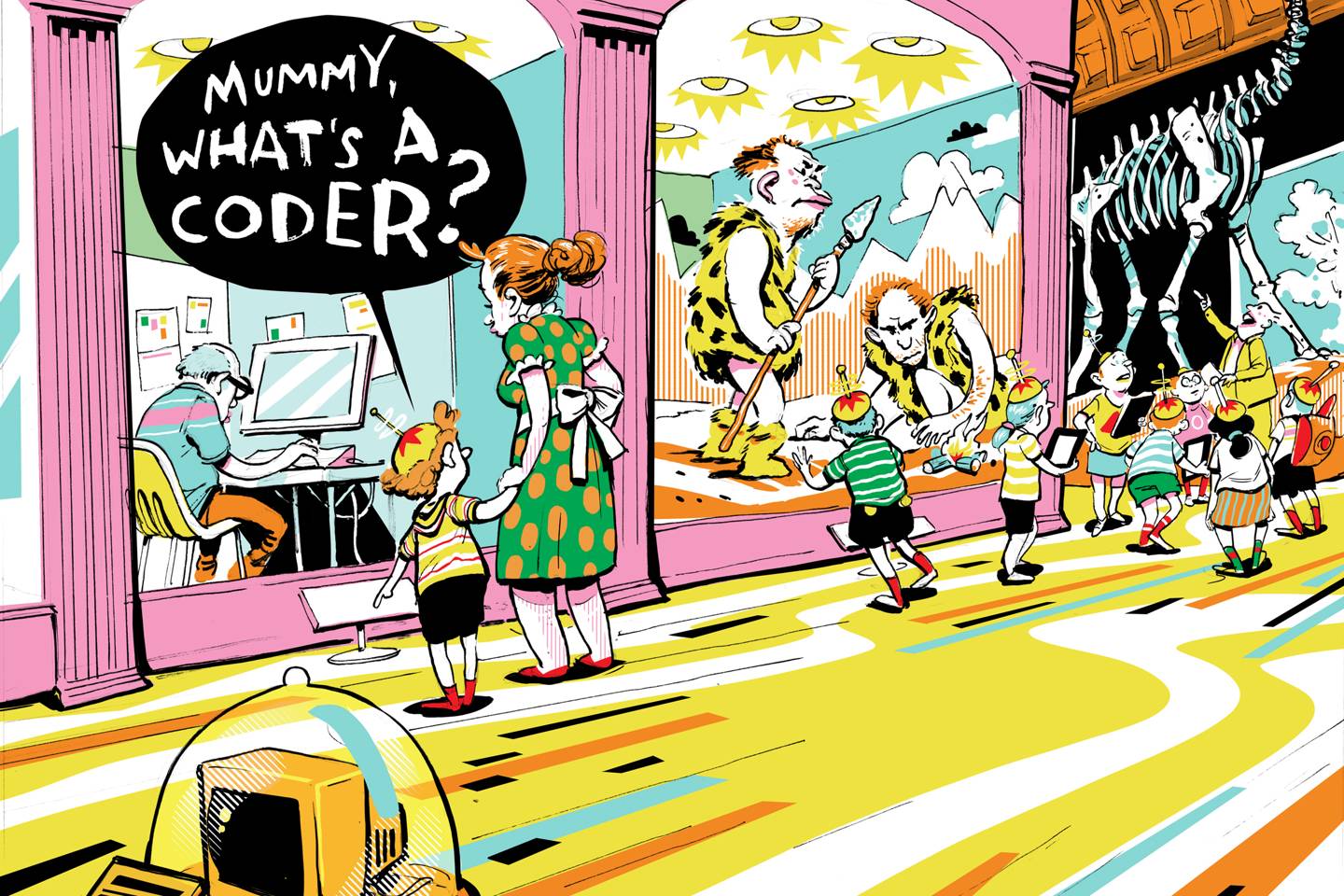
Humankind is facing unprecedented revolutions, all our old stories are crumbling and no new story has so far emerged to replace them. How can we prepare ourselves and our children for a world of such unprecedented transformations and radical uncertainties? A baby born today will be thirty-something in 2050. If all goes well, that baby will still be around in 2100, and might even be an active citizen of the 22nd century. What should we teach that baby that will help him or her survive and flourish in the world of 2050 or of the 22nd century? What kind of skills will he or she need in order to get a job, understand what is happening around them and navigate the maze of life?
Unfortunately, since nobody knows how the world will look in 2050 – not to mention 2100 – we don’t know the answer to these questions. Of course, humans have never been able to predict the future with accuracy. But today it is more difficult than ever before, because once technology enables us to engineer bodies, brains and minds, we can no longer be certain about anything – including things that previously seemed fixed and eternal.
A thousand years ago, in 1018, there were many things people didn’t know about the future, but they were nevertheless convinced that the basic features of human society were not going to change. If you lived in China in 1018, you knew that by 1050 the Song Empire might collapse, the Khitans might invade from the north, and plagues might kill millions. However, it was clear to you that even in 1050 most people would still work as farmers and weavers, rulers would still rely on humans to staff their armies and bureaucracies, men would still dominate women, life expectancy would still be about 40, and the human body would be exactly the same. Hence in 1018, poor Chinese parents taught their children how to plant rice or weave silk, and wealthier parents taught their boys how to read the Confucian classics, write calligraphy or fight on horseback – and taught their girls to be modest and obedient housewives. It was obvious these skills would still be needed in 1050.
In contrast, today we have no idea how China or the rest of the world will look in 2050. We don’t know what people will do for a living, we don’t know how armies or bureaucracies will function, and we don’t know what gender relations will be like. Some people will probably live much longer than today, and the human body itself might undergo an unprecedented revolution thanks to bioengineering and direct brain-computer interfaces. Much of what kids learn today will likely be irrelevant by 2050.
At present, too many schools focus on cramming information. In the past this made sense, because information was scarce, and even the slow trickle of existing information was repeatedly blocked by censorship. If you lived, say, in a small provincial town in Mexico in 1800, it was difficult for you to know much about the wider world. There was no radio, television, daily newspapers or public libraries. Even if you were literate and had access to a private library, there was not much to read other than novels and religious tracts. The Spanish Empire heavily censored all texts printed locally, and allowed only a dribble of vetted publications to be imported from outside. Much the same was true if you lived in some provincial town in Russia, India, Turkey or China. When modern schools came along, teaching every child to read and write and imparting the basic facts of geography, history and biology, they represented an immense improvement.
In contrast, in the 21st century we are flooded by enormous amounts of information, and even the censors don’t try to block it. Instead, they are busy spreading misinformation or distracting us with irrelevancies. If you live in some provincial Mexican town and you have a smartphone, you can spend many lifetimes just reading Wikipedia, watching TED talks, and taking free online courses. No government can hope to conceal all the information it doesn’t like. On the other hand, it is alarmingly easy to inundate the public with conflicting reports and red herrings. People all over the world are but a click away from the latest accounts of the bombardment of Aleppo or of melting ice caps in the Arctic, but there are so many contradictory accounts that it is hard to know what to believe. Besides, countless other things are just a click away, making it difficult to focus, and when politics or science look too complicated it is tempting to switch to funny cat videos, celebrity gossip or porn.
In such a world, the last thing a teacher needs to give her pupils is more information. They already have far too much of it. Instead, people need the ability to make sense of information, to tell the difference between what is important and what is unimportant, and above all to combine many bits of information into a broad picture of the world.
In truth, this has been the ideal of western liberal education for centuries, but up till now even many western schools have been rather slack in fulfilling it. Teachers allowed themselves to focus on shoving data while encouraging pupils “to think for themselves”. Due to their fear of authoritarianism, liberal schools had a particular horror of grand narratives. They assumed that as long as we give students lots of data and a modicum of freedom, the students will create their own picture of the world, and even if this generation fails to synthesise all the data into a coherent and meaningful story of the world, there will be plenty of time to construct a good synthesis in the future. We have now run out of time. The decisions we will take in the next few decades will shape the future of life itself, and we can take these decisions based only on our present world view. If this generation lacks a comprehensive view of the cosmos, the future of life will be decided at random.
Part two: The heat is on
Besides information, most schools also focus too much on providing pupils with a set of predetermined skills such as solving differential equations, writing computer code in C++, identifying chemicals in a test tube or conversing in Chinese. Yet since we have no idea how the world and the job market will look in 2050, we don’t really know what particular skills people will need. We might invest a lot of effort teaching kids how to write in C++ or how to speak Chinese, only to discover that by 2050 AI can code software far better than humans, and a new Google Translate app enables you to conduct a conversation in almost flawless Mandarin, Cantonese or Hakka, even though you only know how to say “Ni hao”.
So what should we be teaching? Many pedagogical experts argue that schools should switch to teaching “the four Cs” – critical thinking, communication, collaboration and creativity. More broadly, schools should downplay technical skills and emphasise general-purpose life skills. Most important of all will be the ability to deal with change, to learn new things and to preserve your mental balance in unfamiliar situations. In order to keep up with the world of 2050, you will need not merely to invent new ideas and products – you will above all need to reinvent yourself again and again.
For as the pace of change increases, not just the economy, but the very meaning of “being human” is likely to mutate. In 1848, the Communist Manifesto declared that “all that is solid melts into air”. Marx and Engels, however, were thinking mainly about social and economic structures. By 2048, physical and cognitive structures will also melt into air, or into a cloud of data bits.
In 1848, millions of people were losing their jobs on village farms, and were going to the big cities to work in factories. But upon reaching the big city, they were unlikely to change their gender or to add a sixth sense. And if they found a job in some textile factory, they could expect to remain in that profession for the rest of their working lives.
By 2048, people might have to cope with migrations to cyberspace, with fluid gender identities, and with new sensory experiences generated by computer implants. If they find both work and meaning in designing up-to-the-minute fashions for a 3D virtual-reality game, within a decade not just this particular profession, but all jobs demanding this level of artistic creation might be taken over by AI. So at 25, you introduce yourself on a dating site as “a twenty-five-year-old heterosexual woman who lives in London and works in a fashion shop.” At 35, you say you are “a gender-non-specific person undergoing age- adjustment, whose neocortical activity takes place mainly in the NewCosmos virtual world, and whose life mission is to go where no fashion designer has gone before”. At 45, both dating and self-definitions are so passé. You just wait for an algorithm to find (or create) the perfect match for you. As for drawing meaning from the art of fashion design, you are so irrevocably outclassed by the algorithms, that looking at your crowning achievements from the previous decade fills you with embarrassment rather than pride. And at 45, you still have many decades of radical change ahead of you.
Please don’t take this scenario literally. Nobody can really predict the specific changes we will witness. Any particular scenario is likely to be far from the truth. If somebody describes to you the world of the mid-21st century and it sounds like science fiction, it is probably false. But then if somebody describes to you the world of the mid 21st-century and it doesn’t sound like science fiction – it is certainly false. We cannot be sure of the specifics, but change itself is the only certainty.
Such profound change may well transform the basic structure of life, making discontinuity its most salient feature. From time immemorial, life was divided into two complementary parts: a period of learning followed by a period of working. In the first part of life you accumulated information, developed skills, constructed a world view, and built a stable identity. Even if at 15 you spent most of your day working in the family’s rice field (rather than in a formal school), the most important thing you were doing was learning: how to cultivate rice, how to conduct negotiations with the greedy rice merchants from the big city and how to resolve conflicts over land and water with the other villagers. In the second part of life you relied on your accumulated skills to navigate the world, earn a living, and contribute to society. Of course, even at 50 you continued to learn new things about rice, about merchants and about conflicts, but these were just small tweaks to well-honed abilities.
By the middle of the 21st century, accelerating change plus longer lifespans will make this traditional model obsolete. Life will come apart at the seams, and there will be less and less continuity between different periods of life. “Who am I?” will be a more urgent and complicated question than ever before.
This is likely to involve immense levels of stress. For change is almost always stressful, and after a certain age most people just don’t like to change. When you are 15, your entire life is change. Your body is growing, your mind is developing, your relationships are deepening. Everything is in flux, and everything is new. You are busy inventing yourself. Most teenagers find it frightening, but at the same time, also exciting. New vistas are opening before you, and you have an entire world to conquer. By the time you are 50, you don’t want change, and most people have given up on conquering the world. Been there, done that, got the T-shirt. You much prefer stability. You have invested so much in your skills, your career, your identity and your world view that you don’t want to start all over again. The harder you’ve worked on building something, the more difficult it is to let go of it and make room for something new. You might still cherish new experiences and minor adjustments, but most people in their fifties aren’t ready to overhaul the deep structures of their identity and personality.
There are neurological reasons for this. Though the adult brain is more flexible and volatile than was once thought, it is still less malleable than the teenage brain. Reconnecting neurons and rewiring synapses is damned hard work. But in the 21st century, you can hardly afford stability. If you try to hold on to some stable identity, job or world view, you risk being left behind as the world flies by you with a whooooosh. Given that life expectancy is likely to increase, you might subsequently have to spend many decades as a clueless fossil. To stay relevant – not just economically, but above all socially – you will need the ability to constantly learn and to reinvent yourself, certainly at a young age like 50.
As strangeness becomes the new normal, your past experiences, as well as the past experiences of the whole of humanity, will become less reliable guides. Humans as individuals and humankind as a whole will increasingly have to deal with things nobody ever encountered before, such as super-intelligent machines, engineered bodies, algorithms that can manipulate your emotions with uncanny precision, rapid man-made climate cataclysms, and the need to change your profession every decade. What is the right thing to do when confronting a completely unprecedented situation? How should you act when you are flooded by enormous amounts of information and there is absolutely no way you can absorb and analyse it all? How to live in a world where profound uncertainty is not a bug, but a feature?
To survive and flourish in such a world, you will need a lot of mental flexibility and great reserves of emotional balance. You will have to repeatedly let go of some of what you know best, and feel at home with the unknown. Unfortunately, teaching kids to embrace the unknown and to keep their mental balance is far more difficult than teaching them an equation in physics or the causes of the first world war. You cannot learn resilience by reading a book or listening to a lecture. The teachers themselves usually lack the mental flexibility that the 21st century demands, for they themselves are the product of the old educational system.
The Industrial Revolution has bequeathed us the production-line theory of education. In the middle of town there is a large concrete building divided into many identical rooms, each room equipped with rows of desks and chairs. At the sound of a bell, you go to one of these rooms together with 30 other kids who were all born the same year as you. Every hour some grown-up walks in and starts talking. They are all paid to do so by the government. One of them tells you about the shape of the Earth, another tells you about the human past, and a third tells you about the human body. It is easy to laugh at this model, and almost everybody agrees that no matter its past achievements, it is now bankrupt. But so far we haven’t created a viable alter- native. Certainly not a scaleable alternative that can be implemented in rural Mexico rather than just in upmarket California suburbs.
Part three: Hacking humans
So the best advice I could give a 15-year-old stuck in an outdated school somewhere in Mexico, India or Alabama is: don’t rely on the adults too much. Most of them mean well, but they just don’t understand the world. In the past, it was a relatively safe bet to follow the adults, because they knew the world quite well, and the world changed slowly. But the 21st century is going to be different. Due to the growing pace of change, you can never be certain whether what the adults are telling you is timeless wisdom or outdated bias.
So on what can you rely instead? Technology? That’s an even riskier gamble. Technology can help you a lot, but if technology gains too much power over your life, you might become a hostage to its agenda. Thousands of years ago, humans invented agriculture, but this technology enriched just a tiny elite, while enslaving the majority of humans. Most people found themselves working from sunrise till sunset plucking weeds, carrying water buckets and harvesting corn under a blazing sun. It can happen to you too.
Technology isn’t bad. If you know what you want in life, technology can help you get it. But if you don’t know what you want in life, it will be all too easy for technology to shape your aims for you and take control of your life. Especially as technology gets better at understanding humans, you might increasingly find yourself serving it, instead of it serving you. Have you seen those zombies who roam the streets with their faces glued to their smartphones? Do you think they control the technology, or does the technology control them?
Should you rely on yourself, then? That sounds great on Sesame Street or in an old-fashioned Disney film, but in real life it doesn’t work so well. Even Disney is coming to realise it. Just like Inside Out’s Riley Andersen, most people hardly know themselves, and when they try to “listen to themselves” they easily become prey to external manipulations. The voice we hear inside our heads was never trustworthy, because it always reflected state propaganda, ideological brainwashing and commercial advertisement, not to mention biochemical bugs.
As biotechnology and machine learning improve, it will become easier to manipulate people’s deepest emotions and desires, and it will become more dangerous than ever to just follow your heart. When Coca-Cola, Amazon, Baidu or the government knows how to pull the strings of your heart and press the buttons of your brain, could you still tell the difference between your self and their marketing experts?
To succeed in such a daunting task, you will need to work very hard on getting to know your operating system better. To know what you are, and what you want from life. This is, of course, the oldest advice in the book: know thyself. For thousands of years, philosophers and prophets have urged people to know themselves. But this advice was never more urgent than in the 21st century, because unlike in the days of Laozi or Socrates, now you have serious competition. Coca-Cola, Amazon, Baidu and the government are all racing to hack you. Not your smartphone, not your computer, and not your bank account – they are in a race to hack you, and your organic operating system. You might have heard that we are living in the era of hacking computers, but that’s hardly half the truth. In fact, we are living in the era of hacking humans.
The algorithms are watching you right now. They are watching where you go, what you buy, who you meet. Soon they will monitor all your steps, all your breaths, all your heartbeats. They are relying on Big Data and machine learning to get to know you better and better. And once these algorithms know you better than you know yourself, they could control and manipulate you, and you won’t be able to do much about it. You will live in the matrix, or in The Truman Show. In the end, it’s a simple empirical matter: if the algorithms indeed understand what’s happening within you better than you understand it, authority will shift to them.
Of course, you might be perfectly happy ceding all authority to the algorithms and trusting them to decide things for you and for the rest of the world. If so, just relax and enjoy the ride. You don’t need to do anything about it. The algorithms will take care of everything. If, however, you want to retain some control of your personal existence and of the future of life, you have to run faster than the algorithms, faster than Amazon and the government, and get to know yourself before they do. To run fast, don’t take much luggage with you. Leave all your illusions behind. They are very heavy.
Yuval Noah Harari's 21 Lessons for the 21st Century (Vintage Digital) is published on August 30
위의 텍스트를 기반으로 하브루타 나눔을 해보세요.
아래 하브루타노트 활용하시면 좋아요.
가정이나 학교에서 활용 가능한 [하브루타노트] 받아가세요.
http://www.hvf.co.kr/a/hf42/24006
하브루타전문강사 최고위 과정(1급) - 가을학기 연구위원 평생 멤버쉽 (6기)
http://www.hvf.co.kr/a/hf41/43836
일시 : 2019년 11월 14, 15일 오전 10시 ~ 오후 5시
장소 : 서울시여성프라자 4층 시청각실
찾아오시는길 : 서울특별시 동작구 여의대방로54길 18
※ 더 좋은 교육을 위해 [지역대표]와 소통하시면 좋습니다. 거주하시는 지역을 알려주시면 가까운 지역의 교육 담당자와 연결해 드립니다. 장학혜택도 있습니다. 010-3418-0122 로 원하시는 지역을 알려주시면 안내해 드릴께요.
2019 하브루타 튜토리얼(35기) - 하브루타전문강사 입문과정(11월)
- 하브루타 스타일로 하는 소그룹진행 (교회, 가정, 학교 등)
일시 : 2019년 11월 9, 11일 (2일) 오전 10시 ~ 늦은 5시
장소 : 고양캠퍼스 ( 마두역 1번 )
찾아오시는길 : 경기도 고양시 일산동구 중앙로 1129 대우로얄마트 서관 2007호 둘로스기독교육연구소 / 주차가능 합니다.
문의) 010-9141-3855
http://www.hvf.co.kr/a/hf41/44719
2020 하브루타비전트립 - 정통파 유대인 생생한 하브루타 현장 체험 2월 3~9일(7일) 과정 (11월 마감)
http://www.hvf.co.kr/a/hf41/44929

기간 : 2020년 02월 03일(월) ~ 02월 9일(일) / 7일
출발 - 02월 03일 (인천공항) / 도착 - 02월 09일 새벽 6시 (인천공항)
지역 : 미국 LA
대상 : 하브루타 입문, 심화, 전문 과정 수료 및 예정자
인원 : 우선 모집 40명
비용 : 개별 299만원
※ 교육비, 항공료, 숙박, 식사, 입장료 등 일체 비용 포함
내용 :
1일 : 호텔 체크인, 환영 및 워크샵 외
2일 : 유대인 회당, 서점, American Jewish Univ. 견학, 역사박물관 견학 외
3일 : 유대인 랍비 강의, 유대인 학교(유치원) 견학, 유대인 대학살박물관 견학 외
4일 : 유대인 회당 견학, 하브루타 현장 체험, 워크샵(하브루타학교)
5일 : 수료 및 워크샵 현지 투어 외
6일 : 휴식 및 귀국 준비
7일 : 대한민국 도착(02월 09일 새벽 6시 인천공항)
※ 과정 수료시 하브루타전문강사(1급), 하브루타상담사(급) 자격 취득이 가능 합니다.
온오프라인 전문 과정 (총 50시간 이상) 참여 혜택을 드립니다.
하브루타 인물 연구 과정 개설 안내 - 1.5세대의 귀환
http://www.hvf.co.kr/a/hf41/42274
현재는 현용수 교수 (30여권 책과 교안, 강의 포함), 이영희 교수 (20여권 책과 교구재 및 강의), 전성수 교수 (10여권 책과 강의 ) 가 준비 되어 있습니다.
연구를 희망 하시는 분들은 개별 문의 바랍니다.
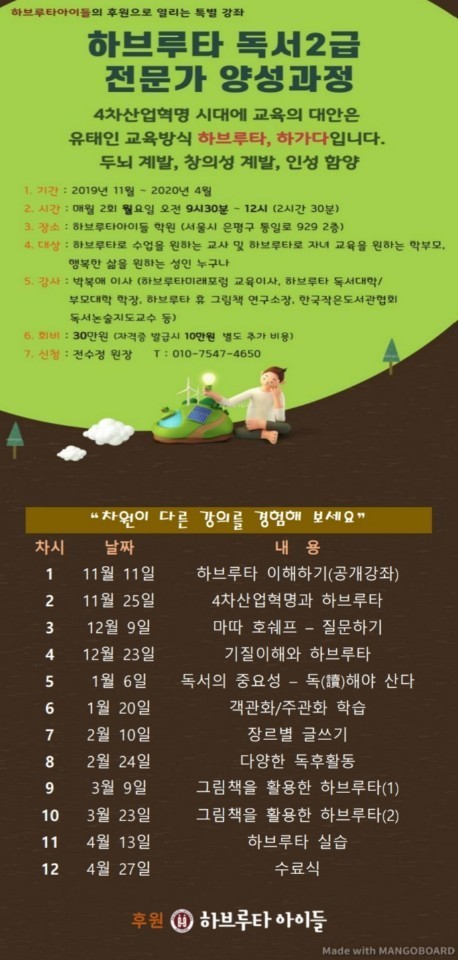
(하브루타아이들) 하브루타 독서 교육 과정 - 11월 11일 부터 총 12회
신청 문의 ) 전수정 원장 010-7547-4650
숭실사이버대학교 입학문의
http://www.hvf.co.kr/a/kcu/
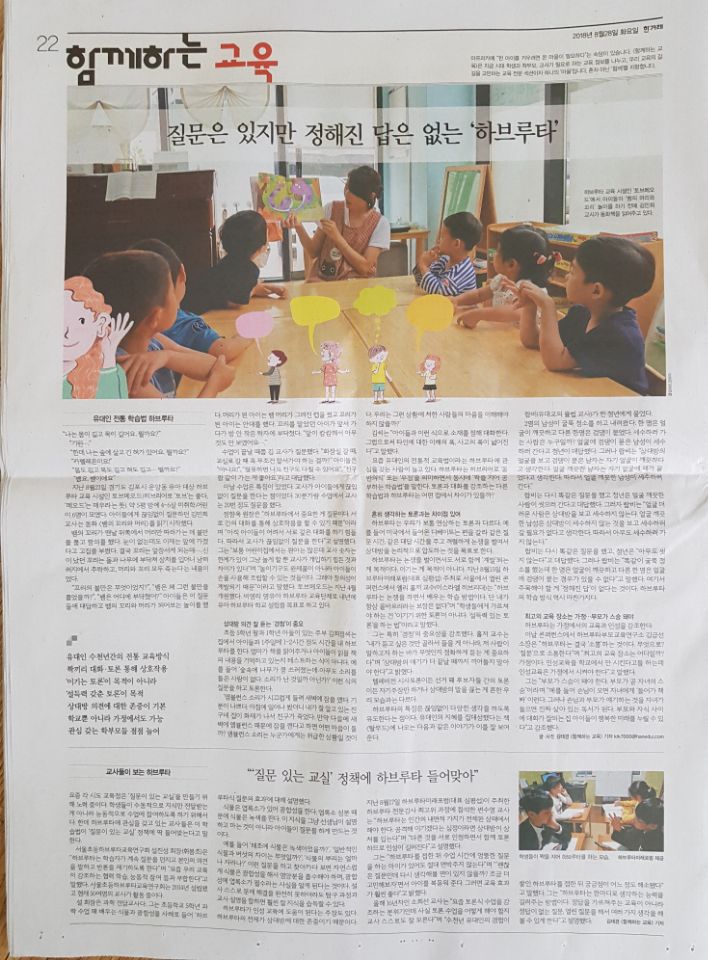
1. “‘질문 있는 교실’ 정책에 하브루타 들어맞아” 한겨레 김태경 <함께하는 교육> 기자
http://www.hani.co.kr/arti/society/schooling/859529.html
2. 질문은 있지만 정해진 답은 없는 ‘하브루타’ -한겨레 김태경 <함께하는 교육> 기자
http://www.hani.co.kr/arti/society/schooling/859528.html
#하브루타 #한겨레 #22면 #하브루타미래포럼 #김태경 #2018하브루타국제컨퍼런스 #하브루타전문강사 #최고위과정 #하브루타킨더교육센터 #토브메오드
연락처 : 1644-2614 / hrm@hvf.co.kr / 카톡 : 하브루타미래포럼
하브루타전문강사 최고위 과정(HLC-1)(1급) 5기 안내 입니다.
안녕하세요.
전문과정 문의가 있어서 소통 드립니다.
기 등록 하신 분들은 번거로울 수 있겠습니다. 현장에서 인사 드리겠습니다.
주로 궁금해 하신 내용 몇 가지 다시 확인 합니다.
1. 3일 과정이 120만원 이면 너무 고액아닌가요?
고액 입니다. 과정에서 보람을 찾으실 수 있도록 더 잘 준비하겠습니다.
이번 과정은 단순히 몇 일 공부 하는 정도로 이해 하시기 보다는 길게 보고 참여하신다는 마음으로 오시면 좋겠습니다.
교육이 쉬운 것인가요? 늘 고민하고 조심스러운 부분이 전달하는 입장에 있는 교수자가 아닌가 합니다.
입문(3급), 심화(2급), 전문(1급) 과정으로 기존에 진행 되는 부분이 있는데요. 이 과정이 210만원 과정(124시간 이상) 입니다. 이 번 과정을 마무리 하시고 입문, 심화 과정도 채워드리는 과정입니다. 한 번에 3,2,1을 해결 할 수 있다는 장점은 분명히 있습니다.
국내에 들어온 이후 8년여 연구한 자료 들도 공유 드립니다. 국외 자료 포함해서 꾸준한 스터디 모임도 함께 합니다.
2. 수료 후, 자격증 취득 후 활동에 대한 보장이 있나요?
송구하지만 어떠한 보장도 해 드리지 못합니다.
다만 네트워크를 만들어 드립니다. 분야별로 더 심도 있는 연구가 가능하도록 돕습니다. 독서, 영어, 수학, 역사, 코딩 / 크리스천 그룹 / 지역별 모임 등을 지원드립니다.
생계형 창업을 희망하시는 분들은 개별 문의 바랍니다. 전문가 그룹이 참가자 분들의 창업을 돕습니다.
이번 과정을 수료하고 OJT과정 까지 진행하시면 3급(입문)과정 개설을 지원합니다. 여기에 교육 참가자 모집에 도움을 드립니다. 이번 과정 홍보도 네이버를 비롯해서 다양한 매체와 다양한 방법으로 진행 되었습니다.
조금 더 홍보가 확장 될 예정입니다. 교육이 필요한 곳에는 지속해서 MOU 를 맺어 가고 있습니다. 학교나 단체 등과 협력은 지속적으로 해 나갈 예정입니다.
3. 어떤 분들이 주로 오시나요?
포럼은 태생적으로 R&D와 하브루타학교 설립을 위해 만들어 졌습니다. 우리나라에 전달 된 하브루타가 올바른 방향으로 발전 할 수 있도록 연구하는 일은 게을리 하지 않을 것입니다. 주로 현직 교수, 교사, 전문강사, 학부모 등 다양한 분야에서 참여 하십니다. 좋은 만남이 있을 것입니다.
4. 미국 교육 연수는 꼭 가야 하나요?
아닙니다. 선택 사항입니다. 홀저 교수와 켄트 교수와 더 폭넓은 소통을 희망하시면 참석을 권합니다. 이번 후속 일정은 예시바대학교, 정통파 샤밧, 켄트 교수 연구 대학 등의 동선으로 잡히고요. Ivyleague와 뉴욕을 중심으로 움직입니다. 향후 해외 교류도 폭을 넓혀나가는 차원입니다. 어학연수나 유학, 학술 교류 등 입니다.
5. 하브루타와 하브루타스타일(방식)은 다른가요?
많은 차이가 있습니다. 유재석, 강호동과 유재석 처럼, 강호동 처럼은 다르지요. 국내 공교육은 질문이있는 교실, 질문이 있는 교과서 로 하브루타가 알려지고 있는데요. 한국형 하브루타 라고 하는 부분들이 대부분 하브루타 방식입니다. 이 부분에 대한 정리를 수면위에 잘 끌어올려준 책이 A Philosophy of Havruta by Elie Holzer (Author), Orit Kent (Author) 입니다. 번역본이 출판 되어 있고요. 이 번 과정에는 1권의 책을 더 탐독하게 됩니다. Attuned Learning by Elie Holzer (Author) 이고요. 가능하다면 The Ways of Reason by Moshe Chaim Luzzatto (Author) 까지는 검토 하는 부분이 필요해 보입니다. 전문강사 최고위 과정이라서요. 관련 책에 대한 스터디는 지속적으로 있습니다. 조급하게 접근 하기 보다는 시간을 두고 연구하시길 추천 드립니다.
6. 하브루타 교육과정 사전 사후 측정도구가 있다고 하던데요.
하브루타교육을 진행하면 6가지 특징적인 것들이 도출 되는데요. 이러한 특징적 요소가 현장에서 잘 나타나지 않는 다면 하브루타 교육이 맞는지 검토가 필요합니다. 교수자, 학습자 모두 셀프 리포팅 방식으로 체크해 볼 수 있도록 지표로 준비 되어 있습니다. 사전 사후 측정이 이루어 지고요. 평가 부분에 대한 팁도 얻으실 수 있습니다.
다음세대 교육을 고민 하신다면 '하브루타' 교육을 추천드립니다. 이 들 만큼 생존교육과 다음세대, 세대 통합 교육에 노하우가 있는 그룹이 있을 까요? 3천년 넘게 쌓아 놓은 레거시가 있습니다.
우리나라 교육현장에 교수자와 학습자, 학습자와 텍스트(교과서)의 상호작용은 많이 있어 왔지만 학습자와 학습자 상호작용은 부족하거나 전무했다고 봐도 됩니다. 하브루타 교육 만 가지고 있는 독특한 특징 들이 있습니다.
이번 과정이 단비가 될 것입니다. 검증과 임상이 마무리 된 특효 '약'을 접하게 되시길 권합니다. 이 약을 많은 분들이 처방 받고 우리교육의 체질이 바뀌고 건강해 지기를 소망합니다.
더 자세한 사항은 아래 링크를 참고 하세요.
http://www.hvf.co.kr/a/hf41
#하브루타미래포럼 #하브루타상담협회 #하브루타인문고전협회 #하브루타코칭협회 #하브루타문예협회 #하브루타역사교육협회 #하브루타전도협회 #하브루타협회 #하브루타교육협회 #하브루타선교회 #하브루타부모교육연구소
페북에 공유나 댓글 남겨주시고 참여하시면 최대 50% 장학 혜택도 있어요. 좋은 만남 기대합니다.